explainer
Best Blenders for Protein Smoothies: What Specs Actually Matter
Personal blender, full-size or high-performance? How motor power, jar shape and blade design affect a frozen protein smoothie, what you get by spending more, and the loading order that fixes most lumpy shakes.
A protein smoothie is the easiest test a blender will ever face — and also the one that exposes cheap blenders fastest. Frozen fruit, a scoop of powder and ice either turn into something smooth and drinkable, or into a lumpy, half-melted shake with a frozen chunk stuck under the blade. Most of the difference comes down to three things: the type of blender, the jar and blade design, and how you load it.
Here’s what to look for, what extra money actually buys, and how to get a smooth result from the blender you already own.
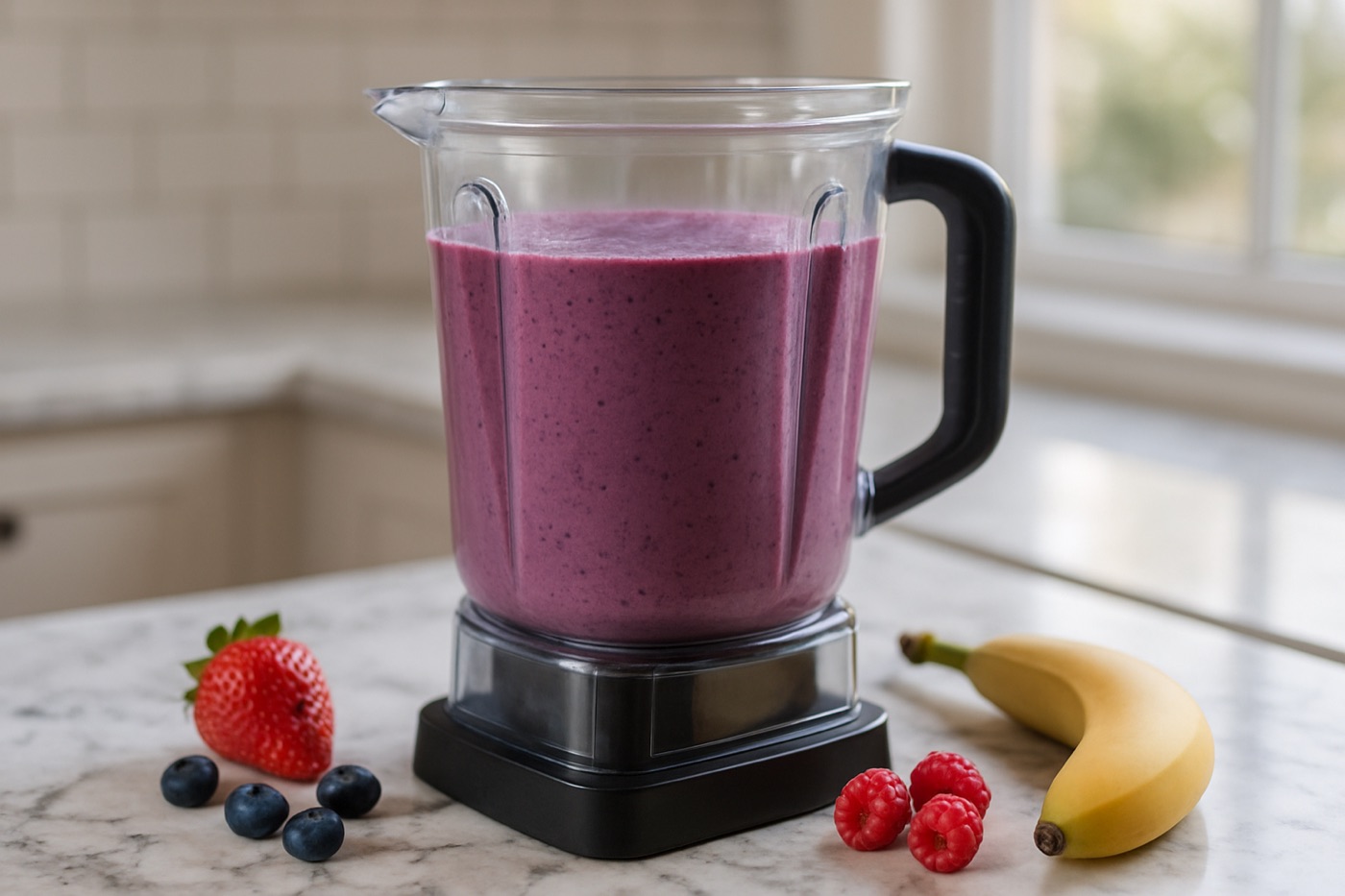
The three kinds of blender
Personal (bullet-style) blenders blend straight into a cup that you screw onto a motor base. They’re compact, quick to clean and ideal for one smoothie at a time. Their limits show with large amounts of frozen fruit or ice, and with thick mixtures that need stirring.
Full-size countertop blenders have a pitcher-style jar, usually 48–72 ounces, and are the general-purpose choice. Mid-range models handle most smoothies well and double up for soups, sauces and crushed ice.
High-performance blenders — the category associated with brands like Vitamix and Blendtec — have powerful motors, sturdy jars and often a tamper for pushing ingredients into the blade. They produce the smoothest texture with fibrous greens, nuts and big frozen batches, and they’re built to last years of daily use. They also cost several times as much.
What the specs actually mean
Wattage is a rough guide, not a ranking. A higher-watt motor helps with ice and frozen fruit, but jar shape and blade design matter just as much. A well-designed jar creates a vortex that pulls ingredients back down into the blade. A poorly designed one leaves them spinning in an air pocket above it. Two blenders with the same wattage can perform very differently.
Jar shape and size. Narrow-bottomed jars work better for single servings. Wide jars need more volume to blend well. If you usually make one smoothie, a big wide jar will struggle more than you’d expect.
Blade design and tamper. Blades that reach close to the jar walls leave fewer unblended pockets. A tamper is the most useful accessory for thick smoothie bowls.
Speed control. A low starting speed and the ability to ramp up prevent cavitation — the air pocket around the blade — and reduce the amount of powder flung up the sides.
What spending more gets you
- Smoother texture with tough ingredients. Kale stems, whole nuts, dates and ice blend more completely.
- Larger frozen batches without stopping to stir.
- Durability. High-performance models are designed for daily heavy use, and many come with long warranties.
- Versatility. Hot soups blended by friction, nut butters and frozen desserts.
What it doesn’t get you is a noticeably better basic smoothie. For milk, protein powder, a banana and a handful of frozen berries, a mid-range blender does the job.
Load it in the right order
Most lumpy smoothies are a loading problem rather than a blender problem:
- Liquid first — milk or water, enough to cover the blade.
- Powder next, so it hits the liquid instead of the dry blade.
- Soft ingredients — yogurt, banana, nut butter, greens.
- Frozen fruit and ice last, on top, where their weight pushes everything down.
- Start low, then go high for 30–60 seconds. Add a splash of liquid if it stalls.
Partly thawing frozen fruit for five minutes helps weaker blenders. So does adding ice gradually instead of all at once.
How I’d choose
| If you… | Choose |
|---|---|
| Make one smoothie a day and want easy cleanup | A personal blender |
| Make smoothies for two or more people, or use lots of ice | A mid-range full-size blender |
| Blend greens, nuts and frozen bowls daily, and want it to last years | A high-performance blender |
Cleaning and care
Rinse the jar right after use. For a deeper clean, half-fill it with warm water and a drop of dish soap and run it for 30 seconds. Don’t run a blender empty, don’t overfill it past the max line, and let the motor rest if it starts to smell hot.
The bottom line
For protein smoothies, you don’t need the most expensive blender — you need one with the right jar size for how much you make, decent power for frozen fruit, and the right loading order. Spend more only if you blend tough ingredients daily or want something that lasts for years.
FAQ
Do I need a high-powered blender for protein smoothies?
Not for basic smoothies. A decent personal or full-size blender handles protein powder, milk, a banana and some frozen fruit. High-performance blenders earn their price with large frozen batches, ice, leafy greens, nut butters and daily heavy use.
Why is my protein smoothie lumpy?
Usually the loading order. Put liquid in first, then powder, then soft ingredients, then frozen fruit and ice on top, and start on a low speed before going high. Powder dumped onto a dry blade clumps against the jar walls.
Is a personal blender or a full-size blender better?
A personal blender is better if you make one smoothie at a time and want to drink from the same cup. A full-size blender is better if you make two or more servings, use lots of ice, or want it for soups and sauces too.