listicle
Vegan Protein Sources, Ranked by Protein per Serving and Quality
Tofu, tempeh, seitan, lentils, edamame, chickpeas, quinoa and pea protein compared on grams of protein per serving and amino acid quality — plus how to combine them so a vegan diet supports training.
“Where do you get your protein?” is the question every vegan hears, usually from someone eating a sandwich with less protein in it than a bowl of lentils. Plant foods can cover protein needs comfortably, including for people who lift. The catch is that plant proteins aren’t interchangeable. Some are dense and complete, some are low in a particular amino acid, and portion sizes vary a lot.
Here’s a ranking that combines both things that matter: how much protein a normal serving delivers, and how good that protein is.
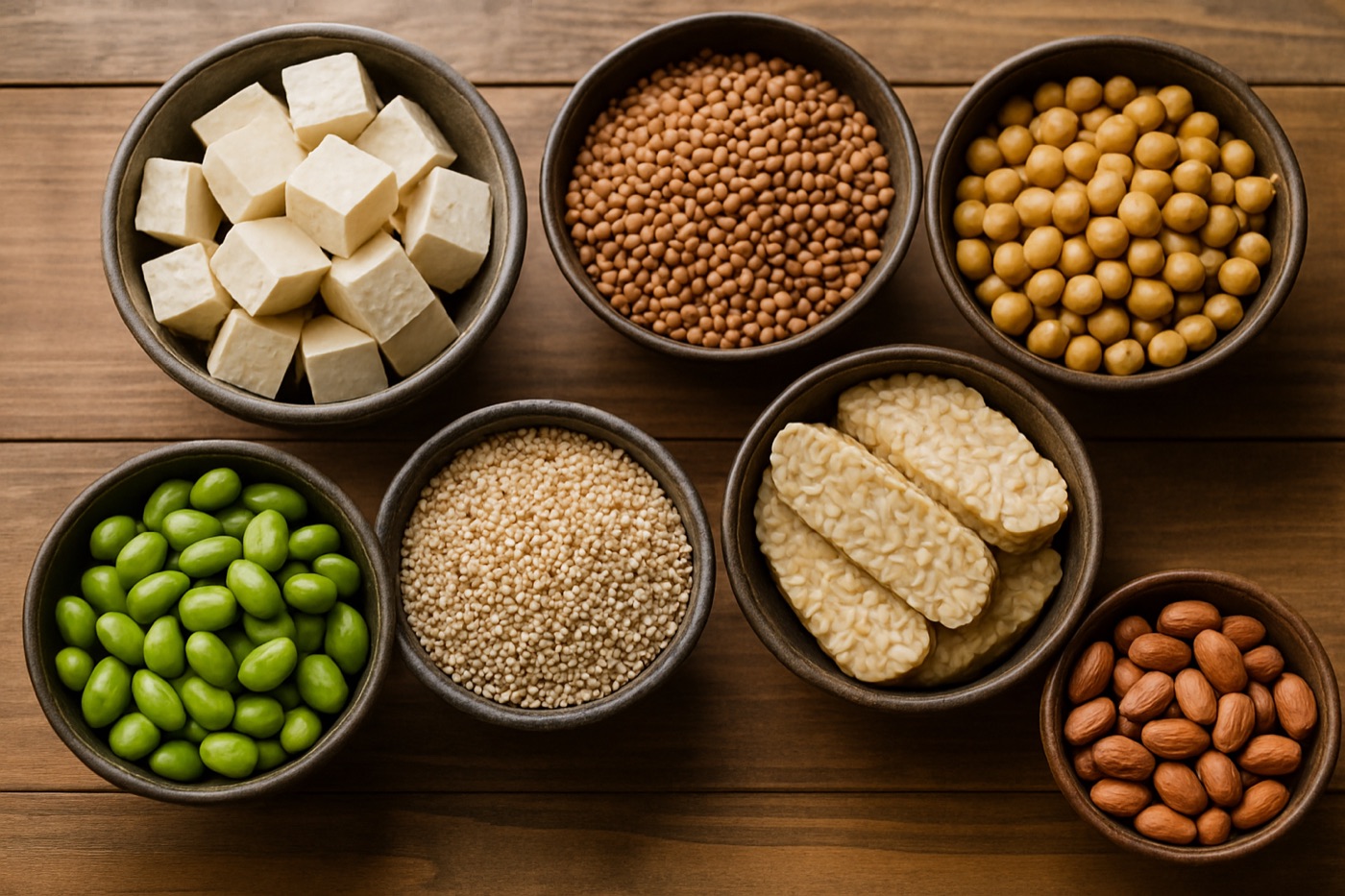
How to judge plant protein
Quantity per serving. Grams of protein in the amount you’d actually eat — a cup of lentils, half a block of tofu — rather than per 100 grams of dry product.
Quality. Protein quality depends on the essential amino acid profile and how well you digest it. Scoring systems such as PDCAAS and the newer DIAAS rate soy near animal proteins. Legumes tend to be low in methionine. Grains, and especially wheat gluten, tend to be low in lysine. That’s why combining sources across the day works so well.
Leucine. This amino acid is a key trigger for muscle protein synthesis. Plant proteins usually contain a little less of it than whey or meat. Eating slightly more total protein closes the gap.
The ranking
The figures are approximate, from USDA FoodData Central and typical product labels. Brands vary.
| Food | Typical serving | Protein (approx.) | Quality notes |
|---|---|---|---|
| Tempeh | 3.5 oz (100g) | ~20g | Soy, fermented, complete; also high in fiber |
| Firm tofu | ½ block (about 7 oz) | ~20g | Soy, complete, very versatile |
| Seitan | 3 oz | ~20g (varies a lot) | Very dense, but low in lysine — pair with legumes |
| Pea protein powder | 1 scoop | ~20–25g | Good lysine, pairs well with rice protein |
| Edamame, shelled | 1 cup | ~18g | Soy, complete, easy snack |
| Lentils, cooked | 1 cup | ~18g | High fiber and iron, lower in methionine |
| Chickpeas or black beans, cooked | 1 cup | ~14–15g | Same profile as lentils, more carbohydrate |
| Hemp hearts | 3 tbsp | ~10g | Good fats; easy to add to anything |
| Quinoa, cooked | 1 cup | ~8g | Complete, but more a carbohydrate than a protein food |
| Peanuts or peanut butter | 1 oz / 2 tbsp | ~7–8g | Calorie-dense; best as a supplement to other sources |
How the top tier compares
Soy foods — tempeh, tofu and edamame — are the backbone of a high-protein vegan diet. They’re complete, well digested and flexible enough for breakfast, lunch and dinner. Tempeh is denser and nuttier. Tofu takes on any flavor.
Seitan delivers the most protein per bite, but because it’s wheat gluten, it’s low in lysine and off-limits for anyone with celiac disease. Pair it with beans or lentils over the day.
Legumes are the workhorse: inexpensive, filling and rich in fiber, iron and folate. Their protein is a little less concentrated, so portions need to be generous.
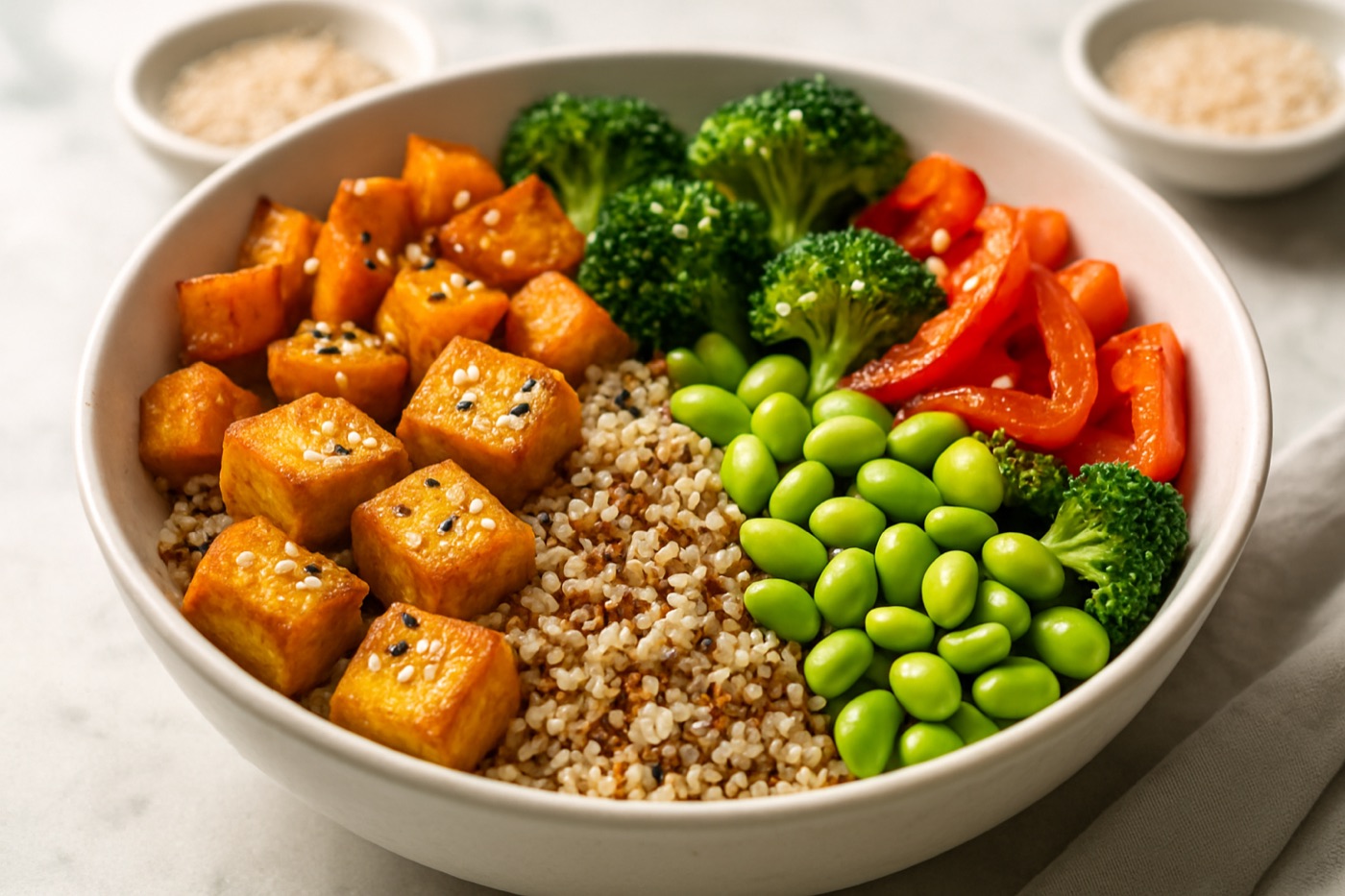
Putting it together for training
For someone who lifts, a reasonable vegan target is about 1.6–2.0 grams of protein per kilogram of body weight per day, spread across three or four meals of 25–40 grams each. A day might look like this:
- Breakfast: tofu scramble with whole-grain toast, or a pea-protein smoothie with soy milk.
- Lunch: lentil and quinoa bowl with roasted vegetables and tahini.
- Snack: edamame or soy yogurt with hemp hearts.
- Dinner: tempeh stir-fry with rice, or seitan with black beans.
Soy milk is worth choosing over almond or oat milk for this reason alone. It carries about 7–8 grams of protein per cup, while almond milk has about 1.
Nutrients to watch alongside protein
A vegan diet can be complete, but a few nutrients need attention. Vitamin B12 must come from a supplement or fortified foods. Iron from plants is absorbed less efficiently, so vitamin C at the same meal helps. Omega-3s, iodine, calcium and vitamin D are also worth checking. That isn’t a reason to avoid plant-based eating. It’s the checklist that makes it work.
The bottom line
Soy foods top the list for quality and convenience. Seitan and pea protein give you density. Legumes give you volume, fiber and value. Eat a variety across the day, aim a little higher on total protein than an omnivore would, and a vegan diet will support training just fine.
FAQ
Can you build muscle on a vegan diet?
Yes. Plant proteins work when total protein is high enough and you train progressively. Because many plant proteins are a little lower in leucine and less digestible than animal proteins, aiming toward the higher end of normal targets — about 1.6–2.0 grams per kilogram per day — is a sensible buffer.
Do I need to combine proteins at every meal?
No. The old 'complementary proteins at each meal' rule has been dropped. Eating a variety of legumes, grains, nuts and soy across the day gives your body all the essential amino acids it needs.
What is the highest-protein vegan food?
Per serving, seitan (wheat gluten) and tempeh lead whole foods, at roughly 20 grams per 3–3.5 ounce serving, with pea protein powder similar per scoop. Tofu, edamame and lentils follow closely and score better on amino acid quality than seitan.