comparison
Fitness Tracker vs Smartwatch: Which One Will You Actually Use?
Fitness bands win on battery life, price and comfort; smartwatches win on GPS, workout detail and apps. What each measures well, the calorie-burn number you shouldn't trust, and how to pick for the way you train.
The wearables aisle has blurred into one long row of rectangles on straps. On one end are slim fitness bands that count steps, track sleep and last a week on a charge. On the other are full smartwatches with GPS, apps, payments and a battery that needs charging every night or two. Both claim to make you healthier. The honest question is narrower: which one will you still be wearing in six months, and which of its numbers can you trust?
What each type is for
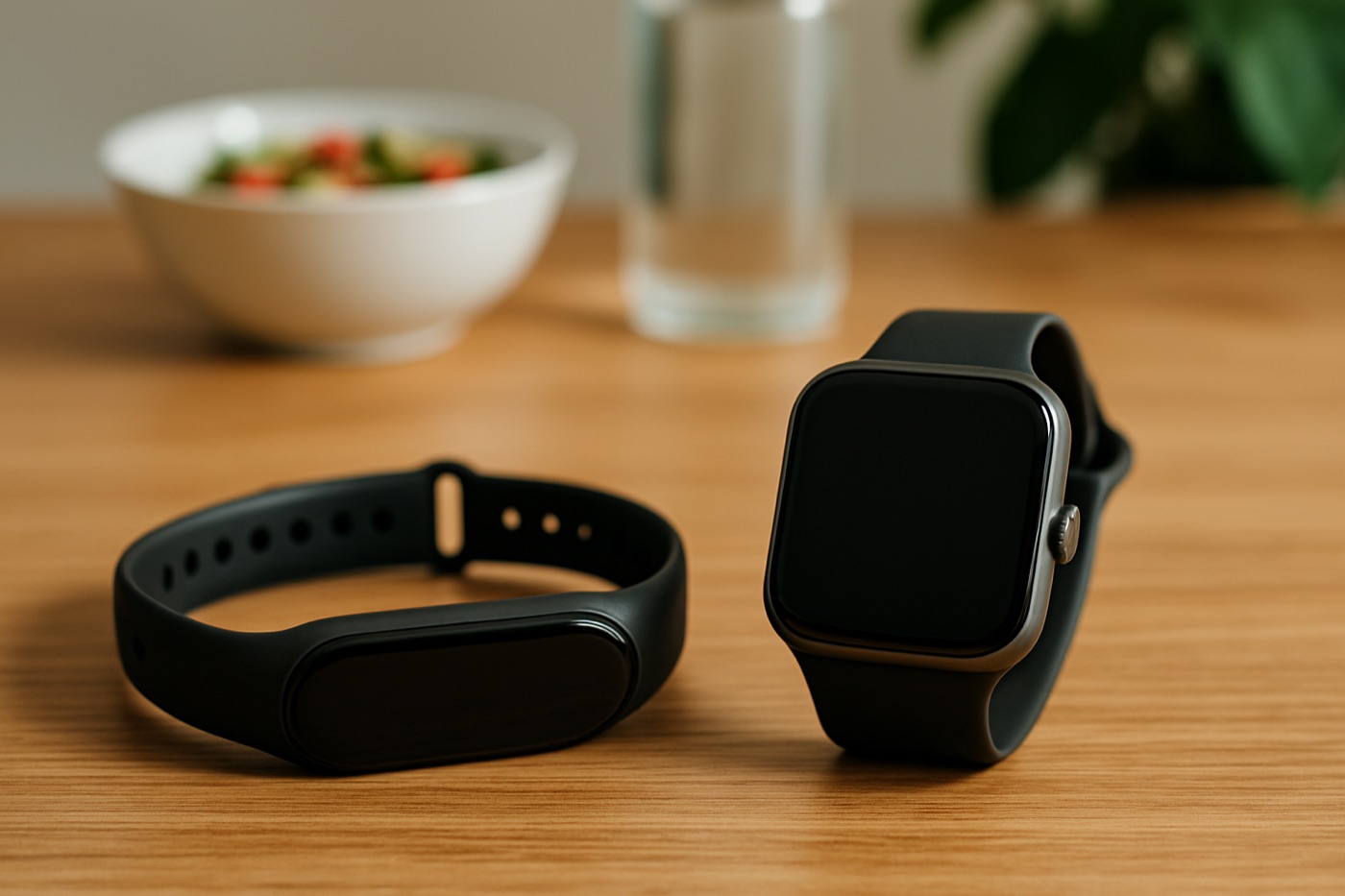
Fitness trackers focus on the basics — steps, heart rate, sleep and active minutes — in a small, light band. They’re cheaper, comfortable to sleep in, and many run for a week or more on a charge. Most rely on your phone for GPS, or skip it entirely.
Smartwatches add a larger screen, built-in GPS on most models, detailed workout modes, notifications, apps, contactless payment and sometimes cellular connectivity. Battery life ranges from about a day on the most app-heavy watches to a week or more on sport-focused models.
What they measure well
- Steps. Wrist accelerometers count walking steps reasonably well. They can miss steps when your arms are still, such as when pushing a stroller, and add some from arm movement.
- Resting heart rate. Optical sensors are good at this, and the trend over weeks is genuinely useful for spotting fatigue, illness or improving fitness.
- Heart rate during steady cardio. Usually good. A Stanford study by Shcherbina and colleagues, published in 2017, found most wrist devices measured heart rate within about 5% in lab conditions.
- GPS distance and pace on smartwatches, especially in open areas.
What to take with a grain of salt
- Calories burned. The same Stanford study found energy expenditure estimates off by roughly 27% to 93%. Eating back “earned” calories from a wearable is one of the most common reasons a deficit stops working.
- Heart rate during intervals and lifting. Rapid changes and wrist flexion confuse optical sensors. A chest strap is far more accurate for interval training.
- Sleep stages. Total sleep time is reasonably close. Light, deep and REM breakdowns are estimates that don’t match a lab sleep study well. Watch the trend rather than any single night.
- “Readiness” and “recovery” scores. These combine heart rate variability, sleep and activity in proprietary formulas. They can be a helpful nudge, but they aren’t diagnoses.
Head to head
| Fitness tracker | Smartwatch | |
|---|---|---|
| Typical battery | About 5–14 days | About 1–2 days for app-heavy watches; a week or more for sport models |
| Comfort for sleep | Excellent | Fine, but bulkier |
| GPS | Usually phone-connected or none | Built in on most models |
| Workout detail | Basic | Extensive: pace, intervals, training load, maps |
| Notifications and apps | Minimal | Full |
| Price | Lower | Higher |
How to choose
- You mainly want steps, sleep and a nudge to move: a fitness tracker. The long battery life means fewer gaps in your data.
- You run, ride or hike outdoors and want pace, routes and training analysis: a sport-focused smartwatch with strong GPS and good battery life.
- You want your phone on your wrist as well: a full smartwatch, accepting nightly charging.
- You do lots of interval or heavy lifting work and care about heart rate: whichever you prefer, plus a chest strap.
Make the data useful
Connect the wearable to the app where you track food, so activity and intake live in the same place. Focus on a few trends you’ll act on, such as daily steps, resting heart rate and sleep duration, and ignore the rest. Above all, don’t treat the calorie-burn number as a budget for extra food.
The bottom line
Fitness trackers win on battery, comfort and price. Smartwatches win on GPS, workout detail and everything that isn’t fitness. Both are good at steps, resting heart rate and steady-state heart rate, and both are poor at calories burned. Buy the one that fits how you train and that you’ll forget you’re wearing — consistency matters more than features.
FAQ
Are calorie burn numbers on wearables accurate?
Not very. A Stanford study (Shcherbina et al., 2017) found most wrist devices measured heart rate within about 5%, but energy expenditure estimates were off by roughly 27% to 93% depending on the device. Use the calorie number as a rough relative guide, not as food you've earned.
Is a smartwatch better for weight loss than a fitness tracker?
Not inherently. Weight loss comes from your eating and activity habits. The best device is the one you'll wear every day and check, and for many people that's the cheaper, lighter band with a battery that lasts a week.
Do I need GPS on my wearable?
Only if you run, ride or hike outdoors and care about distance, pace and routes without carrying your phone. For gym work and walking, step counts and heart rate are enough.