comparison
Sports Drinks vs Water: When You Actually Need the Carbs and Salt
For most gym sessions, water is enough. Sports drinks earn their place in long or hot efforts. How to tell which you need, how much to drink, and how to estimate your own sweat rate in ten minutes.
Walk into any gym and you’ll see brightly colored bottles on half the benches, including the ones next to people doing 30 minutes on a bike. Sports drinks are marketed as the default for anyone who exercises. The research says something narrower: they help in specific situations — long, hard or hot sessions — and add mostly sugar and cost in the rest.
Here’s how to tell which situation you’re in, and how to work out what your body actually needs.
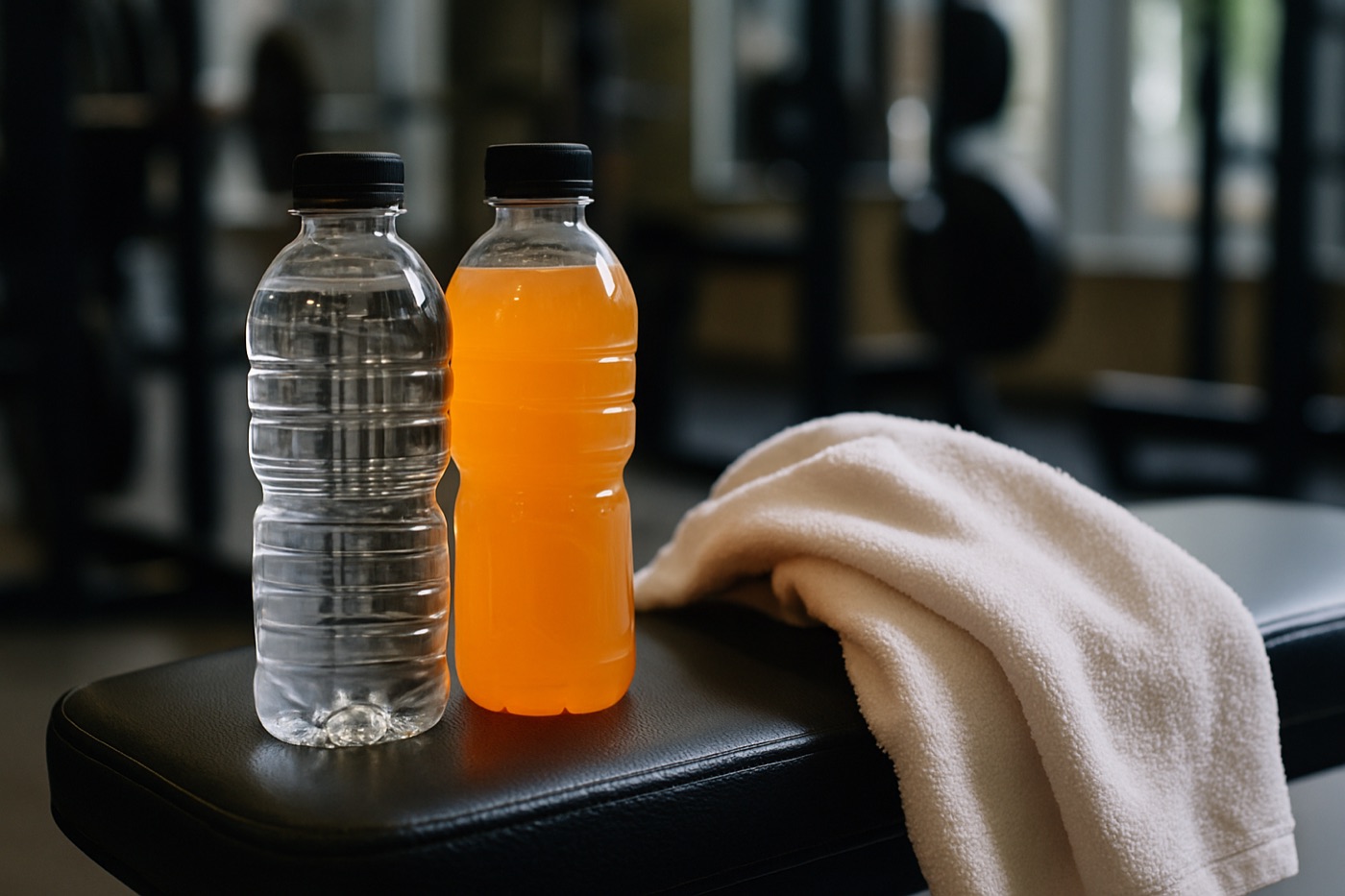
What a sports drink actually adds
A sports drink is water plus two things. Carbohydrate, usually around 6–8% by weight, supplies fuel when muscle glycogen runs low. Sodium and a little potassium replace some of what you lose in sweat and help your body hold on to the fluid you drink. That’s it. Everything else — vitamins, colors, “advanced hydration” — is marketing.
So the question is never whether a sports drink is “better” than water. It’s whether you need carbohydrate and sodium during this particular session.
When water is enough
For most strength sessions, classes and runs or rides under about an hour, water is all you need during exercise. Your glycogen stores comfortably cover that much work, and the sodium you lose is easily replaced by your next meal. Drinking a sports drink here adds calories that work against a fat-loss goal and does little for performance.
The same goes for low-intensity activity of any length, like walking or easy cycling, where fat supplies much of the energy.
When a sports drink earns its place
- Continuous hard efforts longer than about 60–90 minutes. Long runs, rides, games and races. Carbohydrate during exercise delays fatigue, and current sports nutrition guidance suggests about 30–60 grams per hour for efforts of one to two and a half hours, and up to 90 grams per hour for longer events using mixed glucose and fructose sources.
- Heavy sweating in heat. Salty sweaters — people who finish with white streaks on their clothes — lose more sodium and benefit most from it.
- Two sessions in a day, where refueling between them matters.
- Low appetite during long efforts, when drinking carbohydrate is easier than eating it.
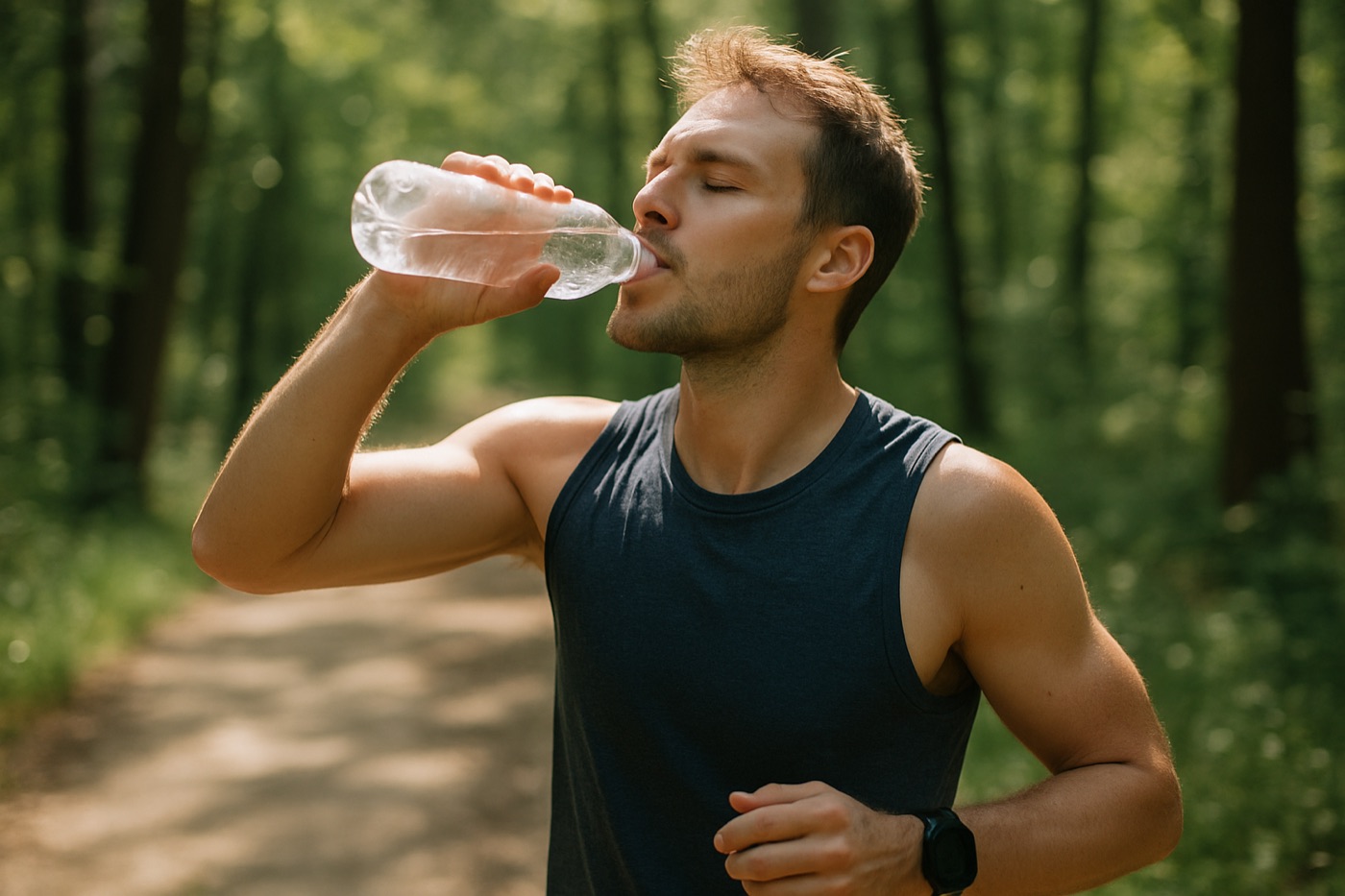
Find your own sweat rate
Sweat rates vary enormously. The American College of Sports Medicine’s position stand on fluid replacement cites a range of roughly 0.3 to 2.4 liters per hour, depending on the person, the intensity and the weather. A fixed “drink X cups” rule will be wrong for most people. Measuring your own takes ten minutes:
- Weigh yourself, without clothes, right before a typical one-hour session.
- Track how much you drink during the session.
- Weigh yourself again, without clothes and after toweling off.
- Sweat loss ≈ weight lost + fluid drunk. One kilogram is roughly one liter, and one pound is roughly 16 ounces.
If you lose more than about 2% of your body weight in a session, drink more next time. If you gain weight, you’re drinking more than you need.
Don’t overdo the water either
Overdrinking is a real risk in long events. Drinking much more than you sweat can lower blood sodium to dangerous levels — exercise-associated hyponatremia — and it’s most common among slower marathon and ultra participants who drink at every aid station. Drinking to thirst, or to a plan based on your sweat rate, avoids it.
A simple decision guide
| Session | Best choice |
|---|---|
| Lifting, classes, runs or rides under ~60 min | Water |
| Easy walks or rides of any length | Water, food as needed |
| Continuous hard effort over ~60–90 min | Sports drink, or water plus gels or food |
| Long sessions in heat, heavy or salty sweater | Sports drink or electrolyte mix |
| Two sessions in one day | Sports drink or carbohydrate snack between |
Cheaper ways to get the same thing
If you need carbohydrate and sodium but don’t like sports drinks, water with an energy gel or a banana and a pinch of salt does the same job. Electrolyte tablets give you sodium without the sugar, which suits long sessions in heat when you plan to eat carbohydrate separately.
The bottom line
Water is the right drink for most workouts. Sports drinks are a tool for long, hard or hot efforts, when carbohydrate and sodium actually change performance. Measure your sweat rate once, drink to a plan rather than by habit, and save the colored bottles for the sessions that need them.
FAQ
Do I need a sports drink for a one-hour workout?
Usually not. For sessions under about an hour, water plus your normal meals covers both fluid and electrolytes. Sports drinks start to make a performance difference in continuous efforts longer than roughly 60–90 minutes, or in heavy sweating in the heat.
How much should I drink during exercise?
Enough to avoid losing more than about 2% of your body weight, without drinking so much that you gain weight. The American College of Sports Medicine's guidance is to base it on your own sweat rate rather than a fixed number of cups, because sweat rates vary several-fold between people.
Can you drink too much water during exercise?
Yes. Drinking far more than you sweat during long events can dilute blood sodium — a dangerous condition called exercise-associated hyponatremia. It's most often seen in slower marathon and ultra participants who drink at every station. Drink to a plan or to thirst, not as much as possible.