explainer
Post-Workout Nutrition: Does the 'Anabolic Window' Really Matter?
The 30-minute anabolic window is mostly a myth — but post-workout nutrition still matters in specific cases. What the meta-analyses found about protein timing, when fast refueling counts, and what to eat after training.
For years, gym wisdom said you had about 30 minutes after training to drink a protein shake before your muscles “closed” and the session was wasted. People left the gym mid-stretch to mix a shake in the parking lot. The research since then has been reassuring: the window is much wider than that for most people, and total daily intake matters far more than the clock.
There are still situations where timing matters, though, and knowing which ones apply to you is the useful part.
Where the anabolic window idea came from
Resistance training raises muscle protein synthesis — the process of building new muscle tissue — and that effect is amplified by eating protein. Early studies measured this over a few hours after training and found that protein eaten soon after a workout produced a strong response. That observation turned into a rule: eat immediately or lose the benefit.
The problem is that muscle protein synthesis stays elevated for roughly 24 to 48 hours after a hard session, and most real people eat several meals in that time.
What the meta-analyses found
In 2013, Brad Schoenfeld, Alan Aragon and James Krieger published a meta-analysis in the Journal of the International Society of Sports Nutrition pooling the studies on protein timing and muscle growth. At first glance, eating protein near training looked helpful. But in many of those studies, the “timed” groups simply ate more protein overall. When the analysis accounted for total daily protein, the timing effect largely disappeared.
The same authors’ review that year, “Nutrient timing revisited”, reached a practical conclusion: the pre- and post-workout meals together form a window of several hours. If you ate a meal with protein in the few hours before training, there’s no rush afterward. If you trained fasted, first thing in the morning, eating sooner after makes more sense.
What actually matters for muscle
- Total daily protein. The International Society of Sports Nutrition’s position stand suggests about 1.4–2.0 grams per kilogram of body weight per day for people who train. This is the main lever.
- Spreading it out. About 20–40 grams per meal, or roughly 0.3–0.4 grams per kilogram, across three to five meals works better than one huge protein meal.
- Training hard and progressively. Food supports adaptation. It doesn’t create it.
When timing genuinely matters
Timing becomes important when recovery time is short:
- Two sessions in one day, or training again within about eight hours.
- Tournaments and multi-day events, where you have to perform again tomorrow.
- Long endurance sessions that empty glycogen stores, followed by another hard session soon after.
In these cases, the priority is carbohydrate. The 2016 joint position statement from the American College of Sports Medicine, the Academy of Nutrition and Dietetics and Dietitians of Canada recommends about 1.0–1.2 grams of carbohydrate per kilogram of body weight per hour for the first four hours when rapid refueling is needed, ideally with some protein alongside.
What to eat after training
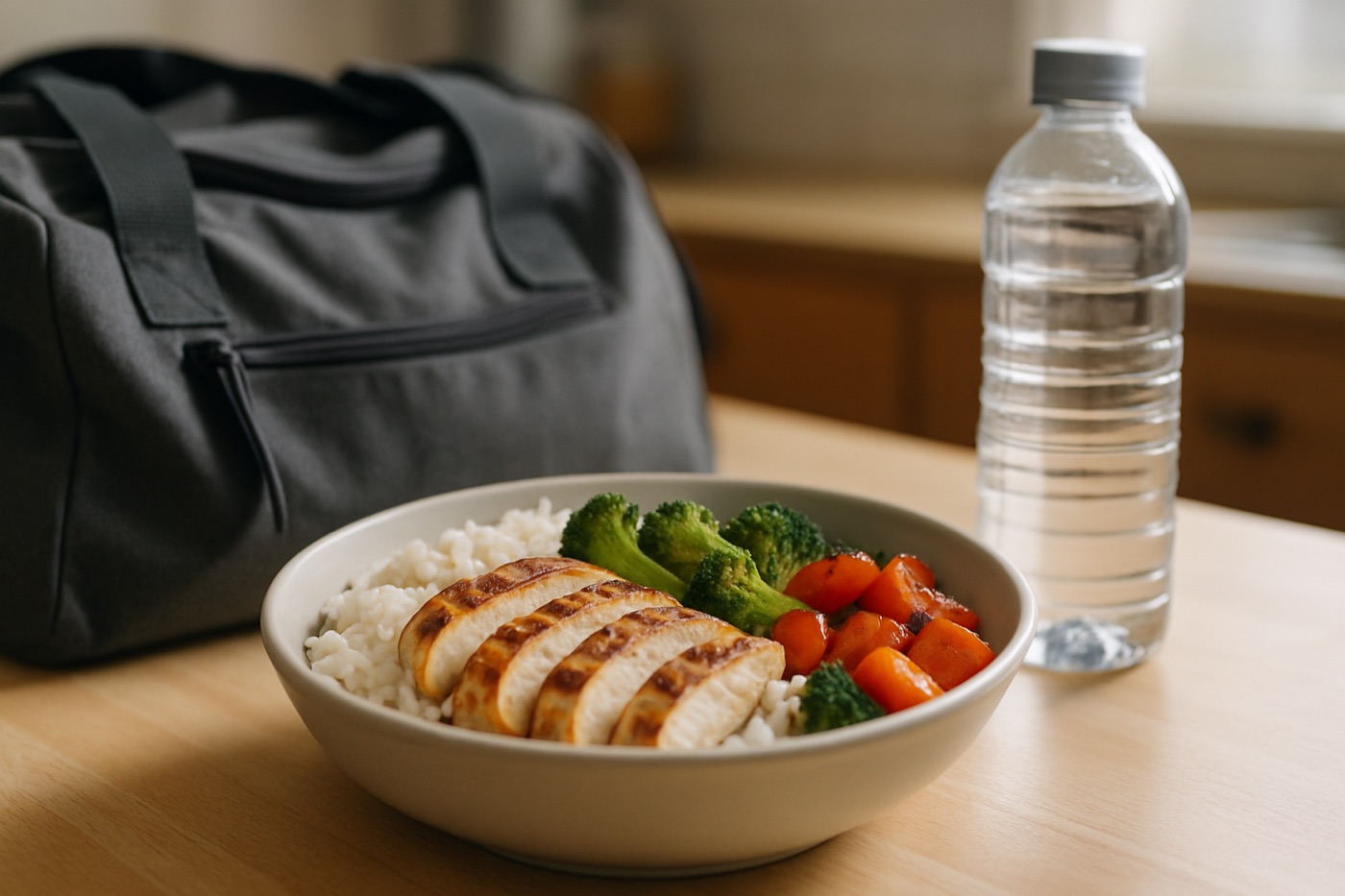
If your next meal is within a couple of hours, just make it a normal balanced meal with a solid protein source. If it isn’t, or you trained fasted, a quick option bridges the gap:
- Greek yogurt with fruit and granola
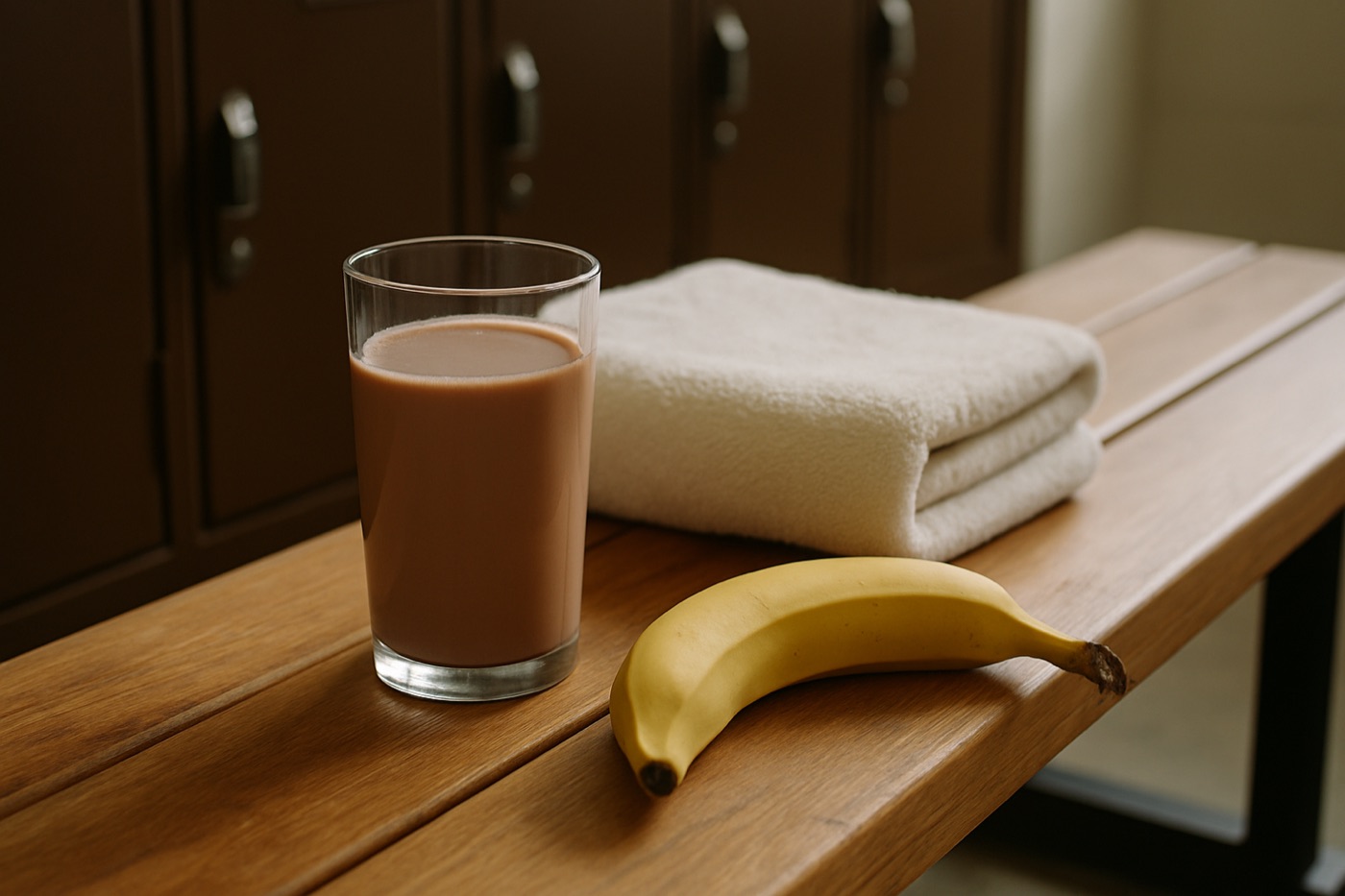
- A protein shake and a banana
- Chocolate milk — roughly a 3:1 to 4:1 carbohydrate-to-protein ratio, cheap and easy to drink
- A turkey or chicken sandwich
- Rice or potatoes with chicken, fish or tofu
Common mistakes
- Rushing a shake but under-eating protein for the rest of the day.
- Skipping carbohydrate after hard endurance work when you train again the next morning.
- Using a big post-workout meal as a reward, which can quietly erase a calorie deficit.
The bottom line
The 30-minute anabolic window is mostly a myth for people who train once a day and eat regular meals. Hit your daily protein, spread it across meals, and eat a protein-rich meal within a few hours of training. Save the precise timing for two-a-days, competitions and back-to-back endurance sessions, where fast refueling actually changes the next performance.
FAQ
Do I need to eat protein within 30 minutes of a workout?
No. A 2013 meta-analysis by Schoenfeld, Aragon and Krieger found that the apparent benefit of eating protein right after training largely disappeared once total daily protein was accounted for. Eating a protein-rich meal within a few hours, before or after training, is enough for most people.
How much protein should I eat after training?
Around 20–40 grams of high-quality protein, or roughly 0.3–0.4 grams per kilogram of body weight, in the meal before or after training. Larger people and older adults tend to benefit from the higher end.
When does fast post-workout refueling matter?
When you train again within about 8–24 hours and need glycogen back quickly — two-a-day sessions, tournaments or multi-day events. Then, eating carbohydrate soon after the first session, about 1.0–1.2 g per kilogram per hour for the first few hours, speeds recovery.